Guides

What to look for in an espresso machine and grinder

Most of what makes good espresso at home isn’t printed on the box. Before you compare models, answer a few questions about how you actually drink coffee. Then look at the handful of specs that make a real difference.

Espresso machines

An espresso machine heats water, forces it through the coffee at around 9 bar and steams your milk. What separates a good one from a frustrating one is how steady it keeps the brew temperature, because that’s what lets you pull the same shot two days in a row.

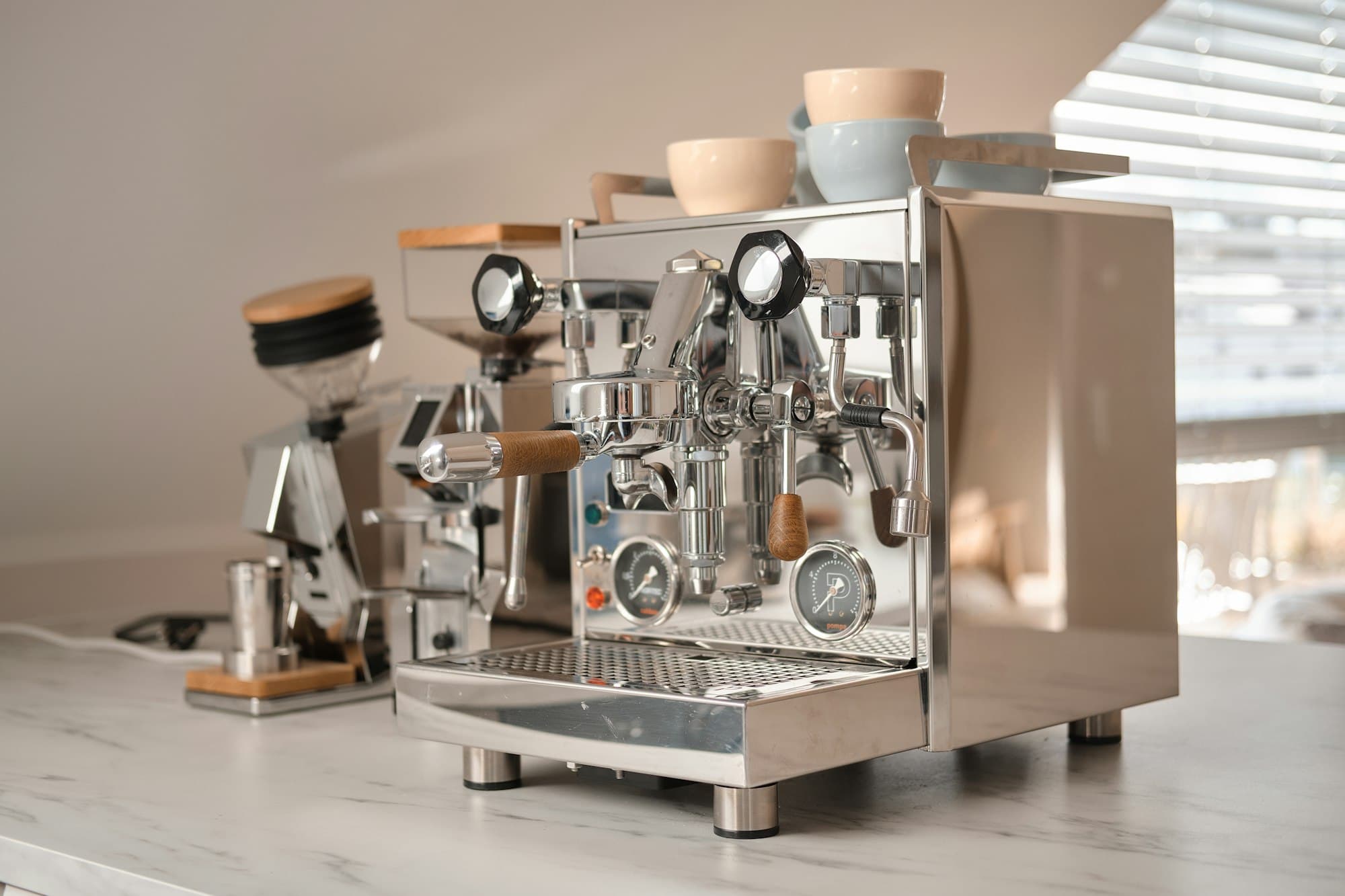
A chrome home espresso machine and coffee grinder on a white marble kitchen counter.

Decide first

  1. Do you drink milk drinks? If it’s mostly lattes, look at steam power first. If you drink your espresso straight, put the money into temperature control instead.
  2. How many drinks in a row? Any machine can handle one or two. If you’re making four lattes every morning, you’ll want one that can brew and steam at the same time.
  3. How long will you wait? A thermoblock is ready in under a minute. Big boiler machines can take 20 minutes or more to heat up, which is why a lot of owners put them on a smart plug.
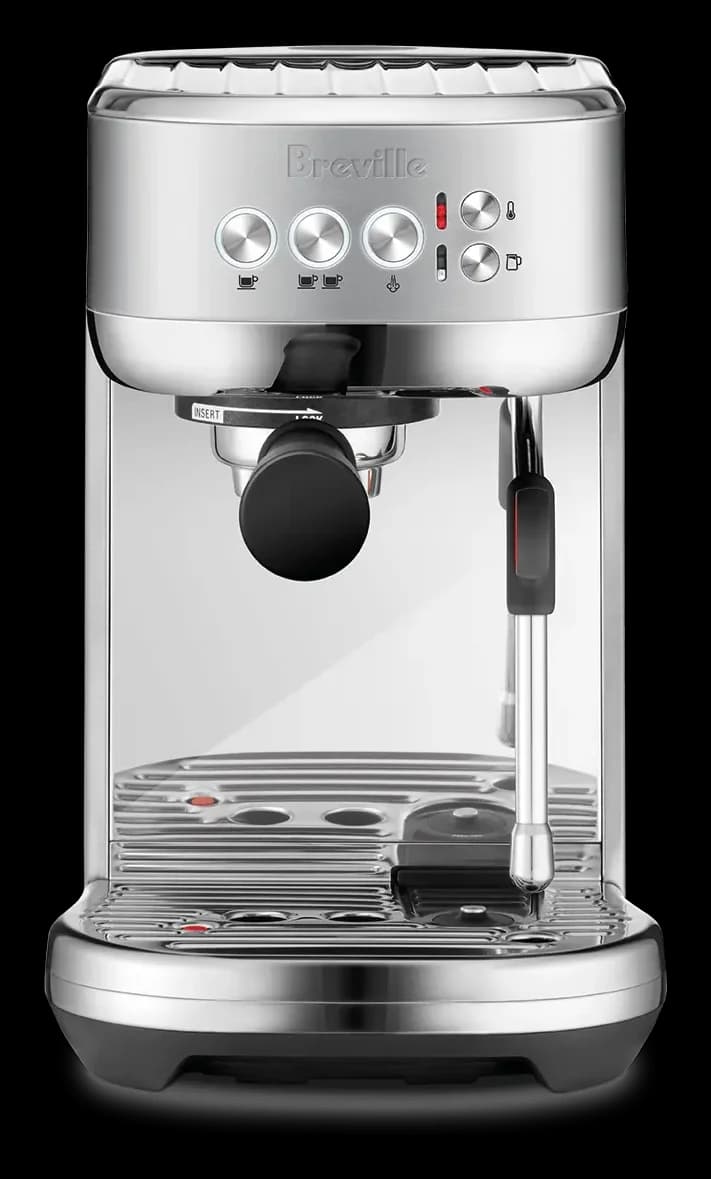
  • Breville Bambino PlusThermoblockHeats water as you need it, so it’s ready in under a minute.e.g. Breville Bambino Plus
  • Gaggia Classic Pro E24Single boilerOne boiler for everything. You brew, then wait for it to heat up for steam.e.g. Gaggia Classic Pro E24
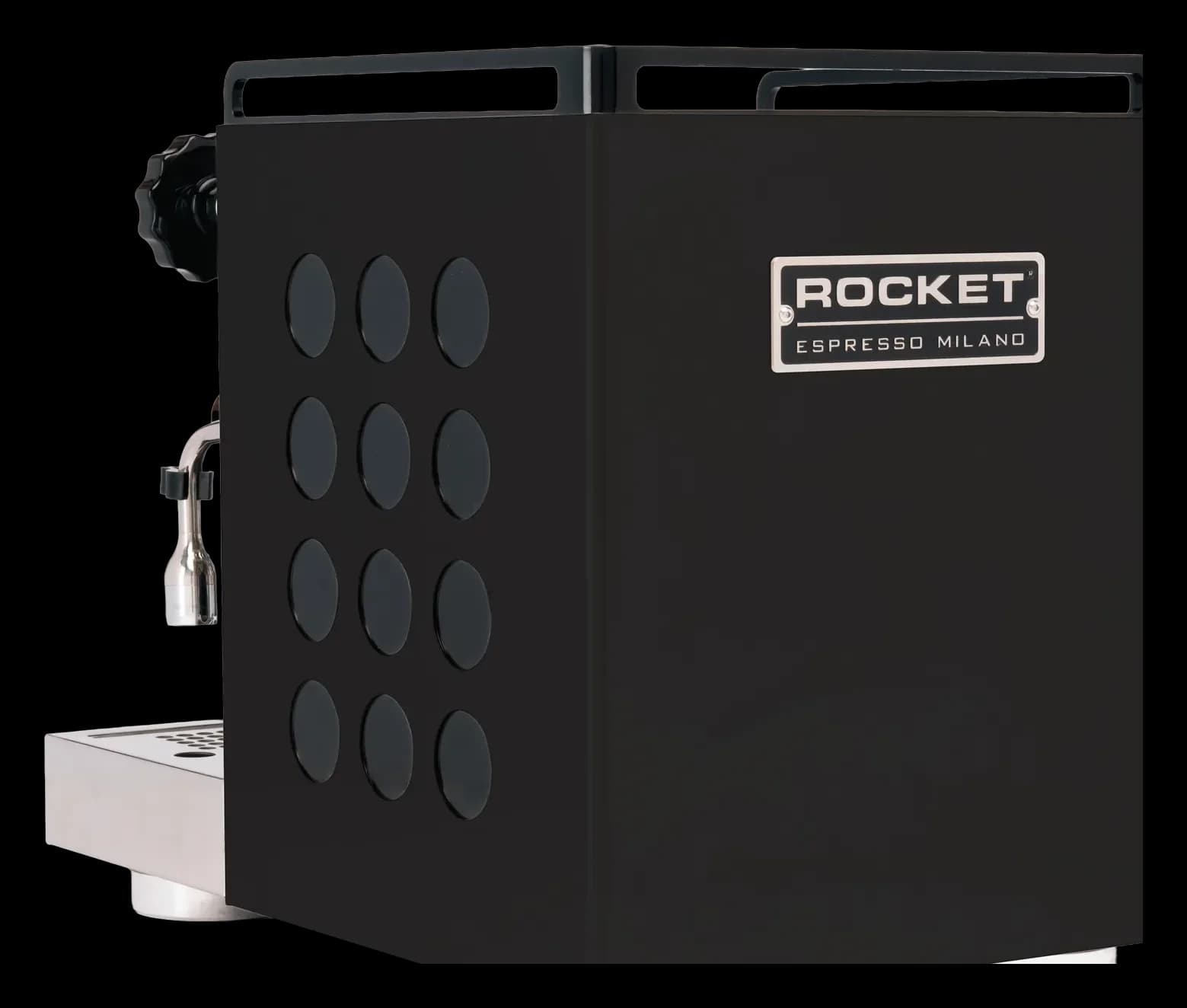
  • Rocket Espresso AppartamentoHeat exchangerBrew water runs through the steam boiler, so you can do both at once.e.g. Rocket Espresso Appartamento
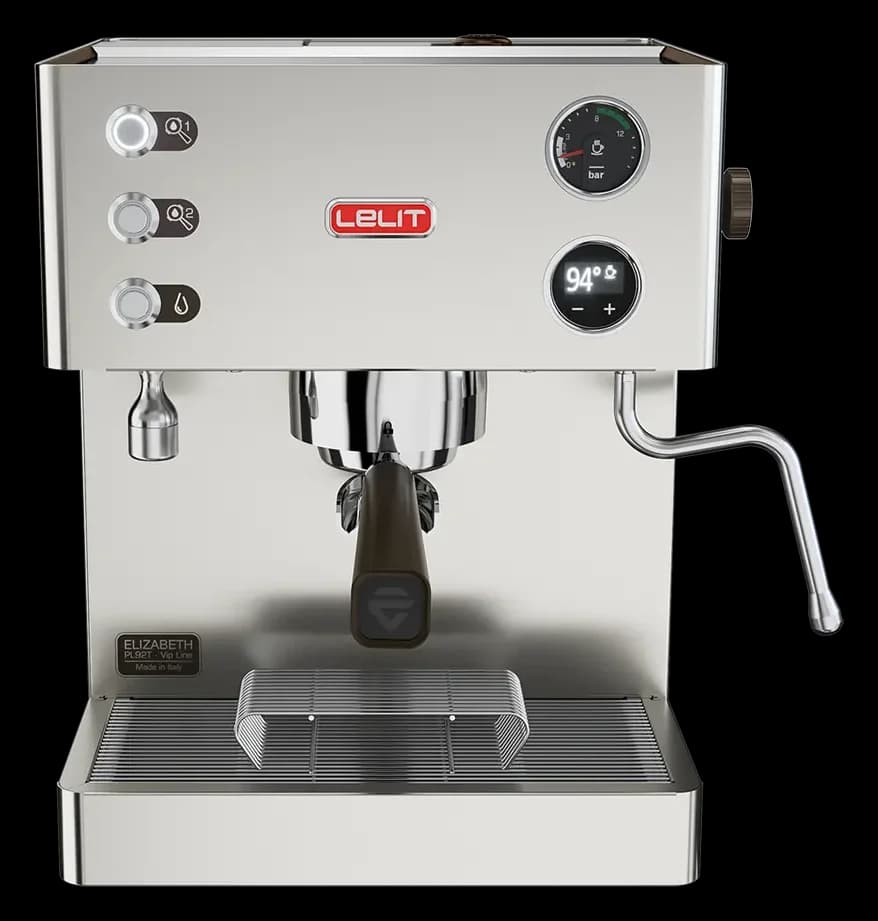
  • Lelit Elizabeth V3Dual boilerSeparate boilers for brewing and steaming. Also does both at once.e.g. Lelit Elizabeth V3
The four kinds of machine you’ll come across.

What matters

Boiler type

Single boilers and most thermoblocks have to brew and steam one after the other. Heat exchangers and dual boilers can do both at the same time.

It’s the difference between steaming milk while the shot runs and standing there waiting for the machine to catch up.

Look for: Whether it can brew and steam at the same time.
Single boilerbrew, then steamHeat exchangerbrew tube in steamDual boilerone for each

PID temperature control

A small digital controller that keeps the water at a set temperature.

Your shots taste the same from one day to the next, and you can turn the heat up a little for light roasts.

Look for: “PID” on the spec sheet. Better still if you can change the temperature yourself.

Brew temperatureWith PID: steadyWithout: swingsTime →

Portafilter size

The portafilter is the handle that holds the coffee. Most are 51, 54 or 58 mm across.

The size decides which baskets and tampers fit. 58 mm is what café machines use, so there’s far more to choose from.

Look for: The diameter in mm, and whether you can actually buy accessories for it.

51545851 mm54 mm (Breville)58 mm (standard)

Standard baskets

Pressurized baskets have one tiny exit hole that builds pressure for you. Standard baskets leave that job to your grind.

Pressurized baskets are forgiving with pre-ground coffee, but there’s a limit to how good the shot can get.

Look for: Standard (single-wall) baskets in the box, or sold separately for that model.

Pressurizedtwo walls, one holeStandardone wall, many holes

Steam power

How strong the steam wand is, which depends on the boiler or heater behind it.

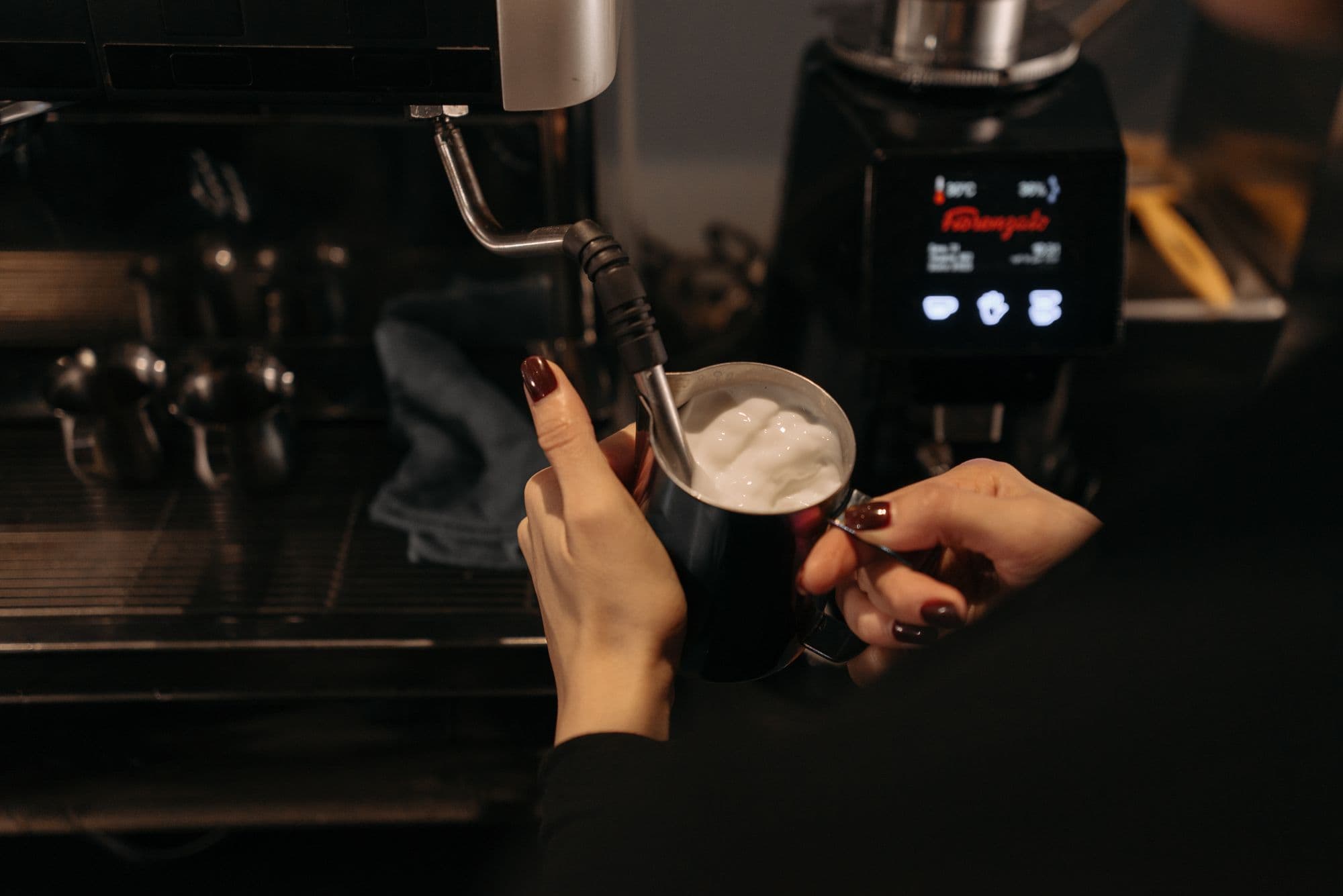
With a weak wand, silky milk takes longer and is a lot harder to get right.

Look for: Reviews that time how long it takes to steam milk for one latte.

Steaming milk in a metal pitcher with an espresso machine’s steam wand.

Service in Canada

Who sells parts and handles warranty repairs here.

Sooner or later every machine needs a new gasket or a repair. And a 230 V European import won’t run on a 120 V outlet.

Look for: A Canadian dealer, and a 120 V model.

120 VNorth American model230 VEuropean import

What you can ignore

  • 15 or 20 bar pumps

    Espresso is brewed at about 9 bar. A bigger number on the box doesn’t make a better shot.

  • “Professional” and “café-quality”

    Anyone can put these words on a box. There’s no standard behind them.

  • A built-in pressure gauge

    When you’re starting out, a scale and a timer tell you much more. It isn’t worth paying extra for.

Beginner mistakes

  • Buying a machine with a built-in grinder.

    The grinder is usually the first thing people outgrow, and on these machines you can’t replace it on its own.

  • Ignoring your water.

    Hard water leaves scale in the boiler, so use filtered water or descale regularly. Don’t switch to distilled, though. Some machines’ level sensors can’t detect it.

  • Testing with stale or pre-ground coffee.

    Standard baskets need fresh beans ground right before the shot. Old coffee makes any machine look bad.

How much to spend

  1. Getting started

    You get

    A compact single boiler or thermoblock that heats up fast and makes proper espresso.

    You give up

    You brew and steam one after the other, milk takes longer, and the portafilter is often smaller.

  2. Step up

    You get

    A 58 mm portafilter, usually PID, and on a heat exchanger, brewing and steaming at the same time.

    You give up

    Longer warm-ups and more counter space. Heat exchangers also tend to need a quick flush before each shot to get rid of water that’s too hot.

  3. Buy once

    You get

    A dual boiler with precise temperature control and strong steam.

    You give up

    It’s big, slow to warm up, and more machine than you need for two drinks a day.

Grinders

The grinder controls how fast water runs through the coffee, and that decides most of what ends up in the cup. For espresso it has to grind very fine and adjust in tiny steps. Most people who’ve been making espresso for a while will tell you to spend as much on the grinder as on the machine.

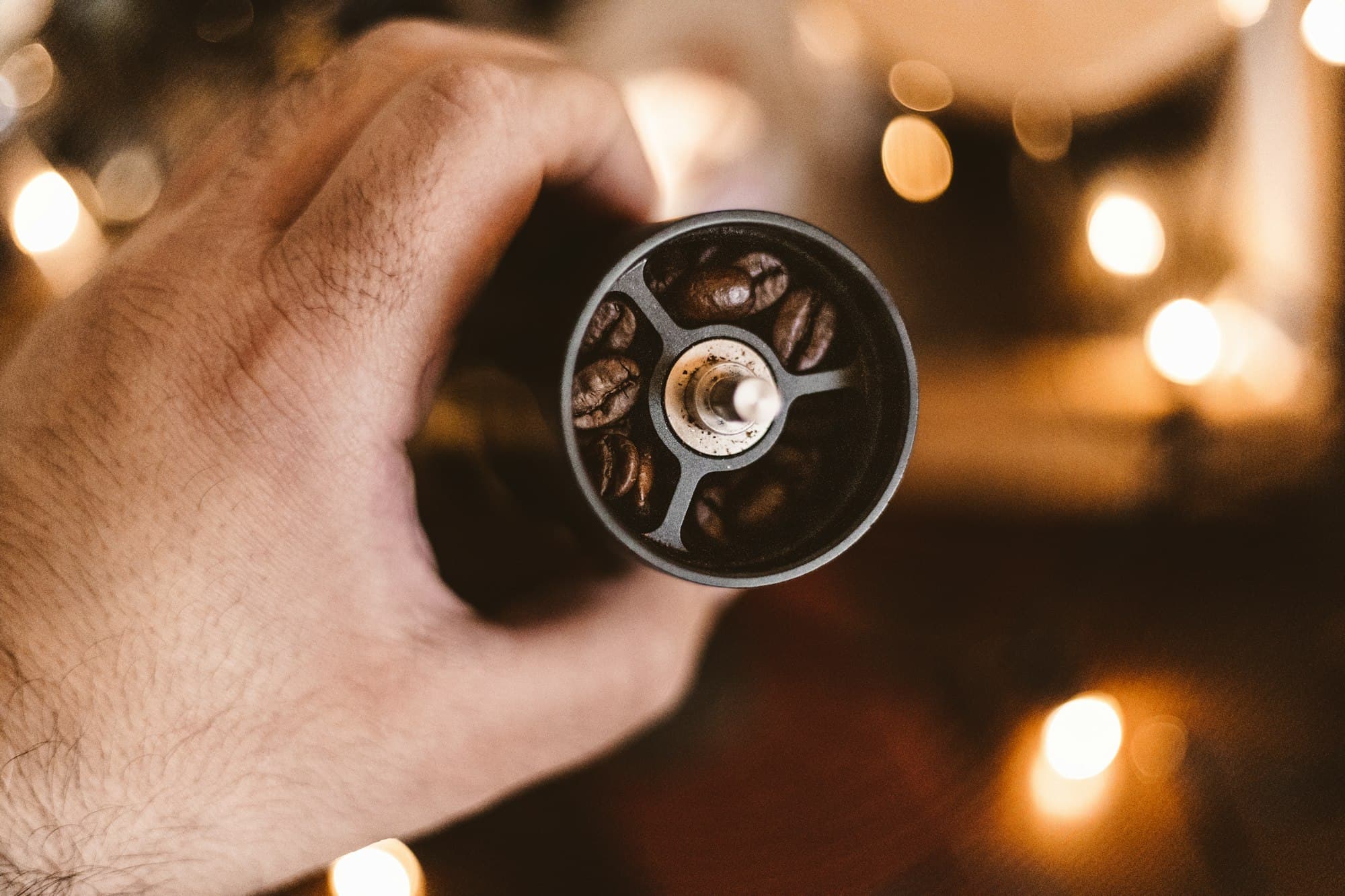
A hand holding a manual coffee grinder filled with whole coffee beans.

Decide first

  1. Espresso only, or filter too? If you also make pour-over, check that the grinder goes coarse enough for filter. Otherwise, plan on getting a second one.
  2. Hand or electric? A hand grinder gets you a better grind for the money. But cranking one wears thin quickly if you’re making several drinks a day.
  3. Do you switch beans often? Then get a single-dose grinder, where you weigh out the beans for each shot. A hopper grinder makes more sense if you drink the same coffee every day.
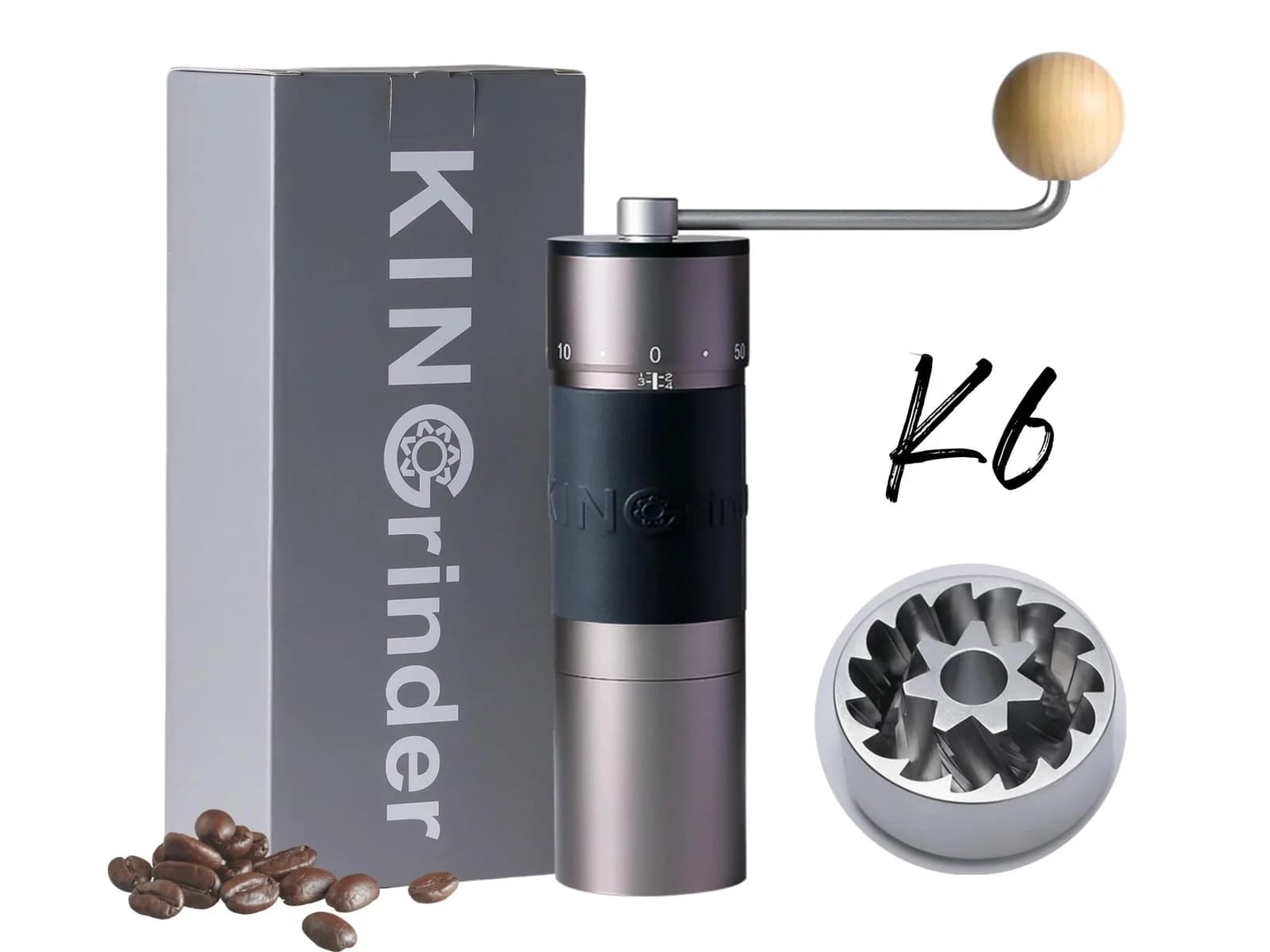
  • KINGrinder K6Hand grinderYou turn the crank for every dose. The best grind for the money.e.g. KINGrinder K6
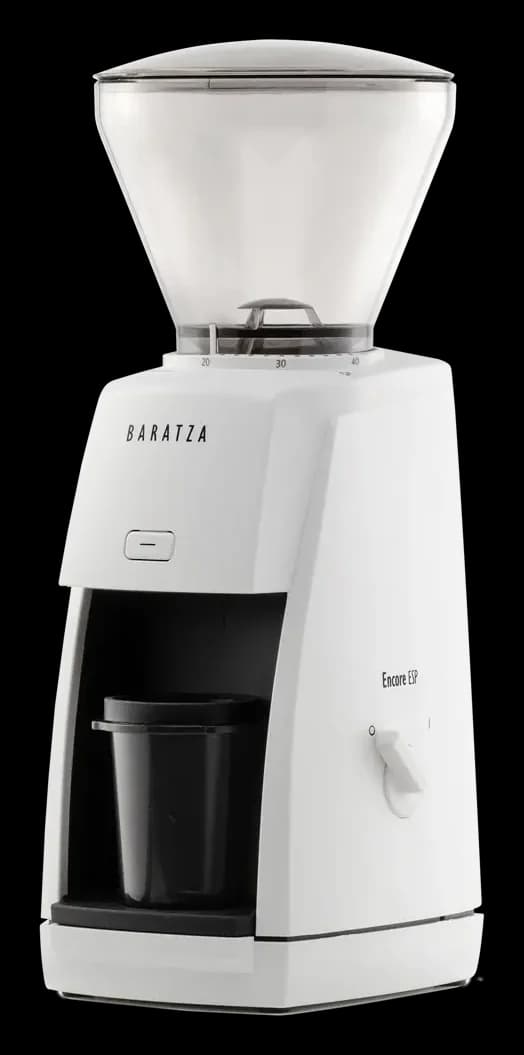
  • Baratza Encore ESPElectric with a hopperBeans sit in the hopper on top and you press a button.e.g. Baratza Encore ESP
  • Turin DF64 Gen 2Electric single doseYou weigh the beans for each shot and grind all of them.e.g. Turin DF64 Gen 2
The three kinds of grinder you’ll come across.

What matters

Burrs instead of blades

Burrs grind beans to a consistent size. Blades just chop them up at random.

You can’t make espresso with a blade grinder. Plenty of cheap burr grinders can’t go fine enough either.

Look for: Espresso listed in the grind range, and reviews that use standard baskets.

Bladechops at randomBurrsan even size

Fine adjustment

Stepped grinders click between set positions. Stepless grinders can stop anywhere.

If the steps are too far apart, you end up stuck between a shot that gushes and one that barely drips.

Look for: Stepless, or lots of small steps in the espresso range.

Steppedclicks between settingsSteplessstop anywhere

Low retention

Retention is the ground coffee that stays inside the grinder after each dose.

It goes stale, ends up in your next shot and throws off your weights.

Look for: Measured retention well under a gram.

Beans in18.0 gGrounds out17.6 gThe missing 0.4 g stays in the grinder (an example)

Burr shape

Conical burrs are a cone that turns inside a ring. Flat burrs are two discs facing each other.

You can make great espresso with either. Conicals tend to be more forgiving, and flats tend to taste a bit clearer.

Look for: Conical if you drink medium and dark roasts, flat if you lean light.

Conicala cone inside a ringFlattwo discs face to face

Parts and returns

Whether you can get burrs and parts in Canada, and what happens if your unit turns out to be faulty.

Budget grinders can vary a lot from one unit to the next, so an easy return is worth having.

Look for: A Canadian store with a clear return policy.

What you can ignore

  • Burr size on its own

    Small burrs that are well aligned will beat big burrs that aren’t. Don’t shop by the millimetre.

  • The number of settings

    “40 settings” doesn’t tell you how many of them are fine enough for espresso.

  • Burr coatings

    Plain steel burrs already last for years at home.

Beginner mistakes

  • Spending almost everything on the machine.

    A good grinder with a basic machine makes better coffee than the other way around. Aim to spend about the same on each.

  • Copying someone else’s grind setting.

    The numbers on the dial don’t line up between grinders, even on the same model. Go by shot time and taste.

  • Overfilling the hopper.

    Beans go stale faster in there than in a sealed bag, so only put in a few days’ worth.

How much to spend

  1. Getting started

    You get

    A good hand grinder, or an entry-level electric burr grinder built for espresso.

    You give up

    Effort with every shot on a hand grinder, or coarser adjustment on the cheaper electrics.

  2. Step up

    You get

    A single-dose electric with stepless adjustment and low retention.

    You give up

    Quality varies from unit to unit at this level, and a lot of them are loud or need some tinkering.

  3. Buy once

    You get

    Big, precisely aligned burrs, a solid build and an easy switch between espresso and filter.

    You give up

    The improvement over a mid-range grinder is real but small, and you’ll mostly notice it with light roasts.

Want a shortlist? Our recommended builds pair machines with grinders at today’s prices, or you can open the builder and compare any two side by side.

Recommended buildsOpen the builder

Photos: Tim Schmidbauer on Unsplash, Pavel Danilyuk on Pexels, Omar Al-Ghosson on Unsplash.