Guides

How to dial in espresso: a beginner’s guide

Dialling in is how you find the grind and recipe that make a particular coffee taste good as espresso. Every bag is a little different, so even on a great machine your first few shots will probably come out sour or bitter. That’s normal. Most people pull a handful before one tastes right.

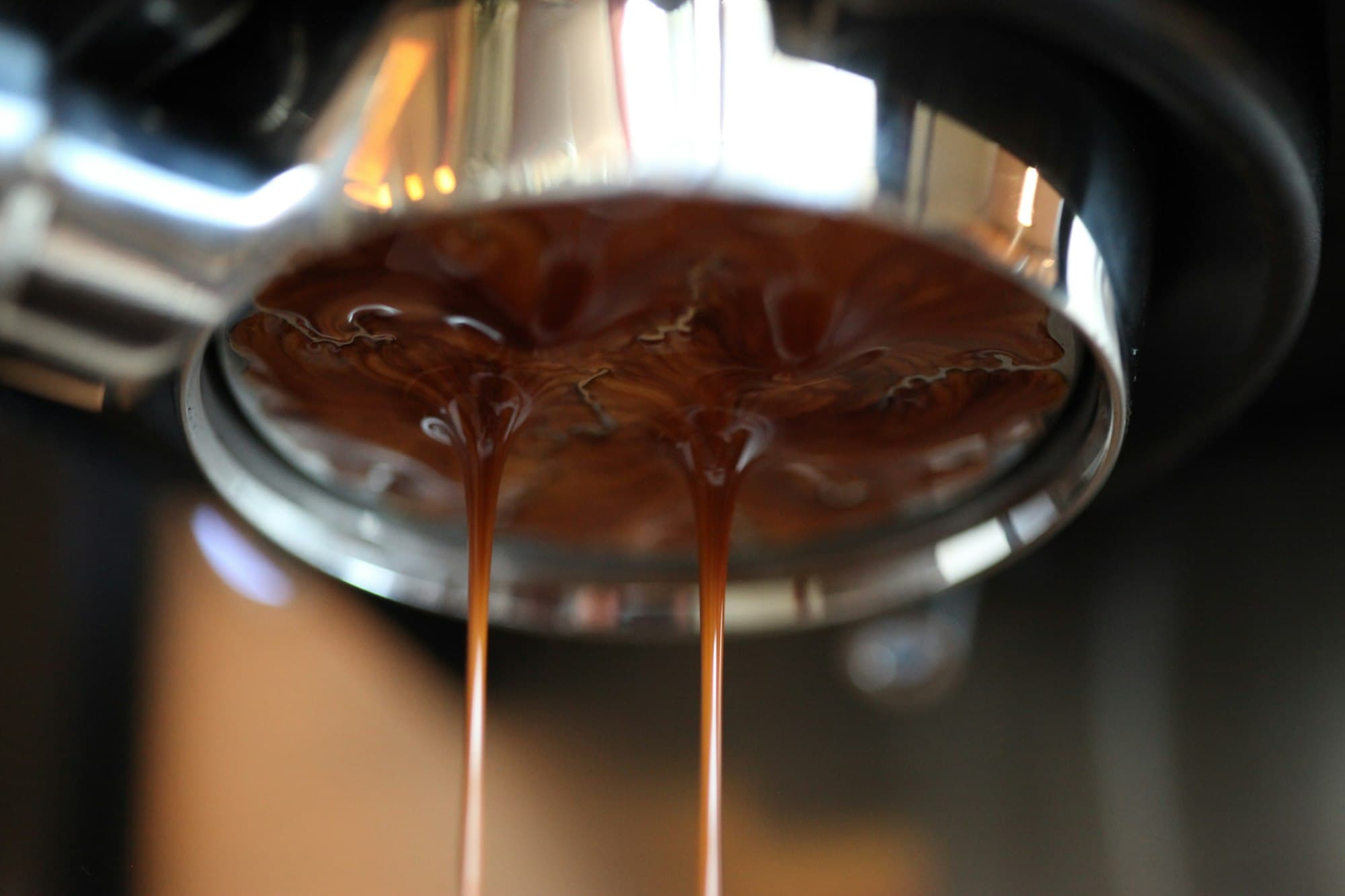
Espresso pouring in two streams from a bottomless portafilter on a home espresso machine.

Start here

36.0 g0:28timer18 g of ground coffee
Dose
18 gThe dry coffee in the basket. Match it to the basket size: an 18 g basket takes about 18 g. Breville’s 54 mm double basket is rated for 16 to 19 g, so start at 17 or 18 g on those.
Yield
36 gThe espresso that ends up in your cup. Weigh it on a scale rather than going by the lines on the glass.
Time
25 to 30 sStart counting when you start the shot. Time tells you whether the grind is roughly right, but taste gets the final word.
Ratio
1:2How much espresso comes out for the coffee that goes in, so 18 g in and 36 g out. A sensible middle ground for medium roasts.

The dial-in loop

Go round this until you get a shot you like. It usually takes a few tries.

  1. Weigh the dose. Use a scale that reads to 0.1 g. Keep the dose the same every time so you can tell what your other changes are doing.
  2. Grind and prep. Grind, break up any clumps with a needle tool, then tamp flat and level. Uneven prep leads to channelling, where water finds weak spots in the puck of coffee and rushes through them instead of through all of it.
  3. Pull onto a scale. Set your cup on a scale under the portafilter and zero it. Start a timer as you start the shot.
  4. Stop at your yield. Stop the shot when the scale hits your target, say 36 g. It keeps dripping for a moment after you stop, so if you keep overshooting, stop a gram or two early.
  5. Write it down. Note the dose, yield, time and grind setting. You’ll think you can remember them, but by the third shot you won’t.
  6. Stir and taste. Give the shot a stir before you sip, because the start and end of a shot taste very different. Taste it straight, even if you mostly drink lattes.
  7. Change one thing. Usually that means moving the grind a small step. If you change two things at once, you won’t know which one made the difference.

Taste, then adjust

Sour, thinunder-extractedSweet, balancedwhere you want to beBitter, dryingover-extracted
Too sour? Grind finerToo bitter? Grind coarser
If it tastesIt meansChange
Sour, sharp or thin, often a fast shotUnder-extracted. Not enough of the coffee dissolved into the shotGrind a step or two finer and keep the dose and yield where they are.
Bitter, harsh or drying, often a slow shotOver-extracted. Too much dissolved, harsh parts includedGrind a step coarser, again keeping the dose and yield the same.
Sour and bitter at once, or the shot spurtsUneven extraction, usually from channellingLook at your prep before you touch the grind. Break up clumps, tamp level and don’t overfill the basket.
Good, but too strong or heavyThe ratio is shorter than you likePull a bit more, say 40 g instead of 36 g, and leave the grind alone.
Good, but weak or wateryThe ratio is longer than you likePull a bit less, say 32 g instead of 36 g, and leave the grind alone.

Watch next: James Hoffmann on YouTube

How I Dial-In Espresso - Part #1

James Hoffmann dials in a new coffee on camera. He pulls a shot, tastes it and talks through what he changes and why. Parts 2 and 3 pick up where this one leaves off.

Going a bit deeper

Dose and yield

Dose is the dry coffee you put in and yield is the espresso that comes out. We weigh both because a shot comes out topped with crema, a foam of gas and oils, and how much crema you get varies a lot between coffees. Two shots can look identical in the glass and still be several grams apart, so measuring by volume doesn’t tell you much.
36 g31 gSame line in the glass, different weight (an example)

Shot time

Shot time tells you how quickly water is getting through the coffee, and that mostly depends on the grind. If you hit 36 g in 18 seconds you’re probably too coarse, and if it takes 45 seconds you’re probably too fine. But if a shot tastes great at 33 seconds, it’s a great shot. Don’t chase the number.

0 s2025–30 s4045Fast: grind finerSlow: grind coarser

Short and long shots

A 1:2 ratio means twice as much espresso comes out as the coffee you put in. Go shorter, around 1:1 to 1:1.5 (what cafés call a ristretto), and the shot gets thicker and more intense. Go longer, around 1:2.5 to 1:3, and it gets lighter in body and extracts more. That can turn a sour shot sweet, or push a good one over into bitter.

1:1.5Short, ristretto style
1:2The usual start
1:3Long, lighter body
Dark: coffee in · light: espresso out

Light and dark roasts

Light roasts are harder to extract. They usually want a finer grind, a longer ratio of about 1:2.5 to 1:3, and hotter water, around 93 to 96 °C. They often run past 30 seconds, which is fine as long as they taste good. Dark roasts are the opposite. They extract easily and turn bitter quickly, so use a shorter ratio, about 1:1.5 to 1:2, and cooler water, around 90 to 92 °C. If you can’t set the temperature on your machine, don’t worry too much about it. Grind and ratio do most of the work.

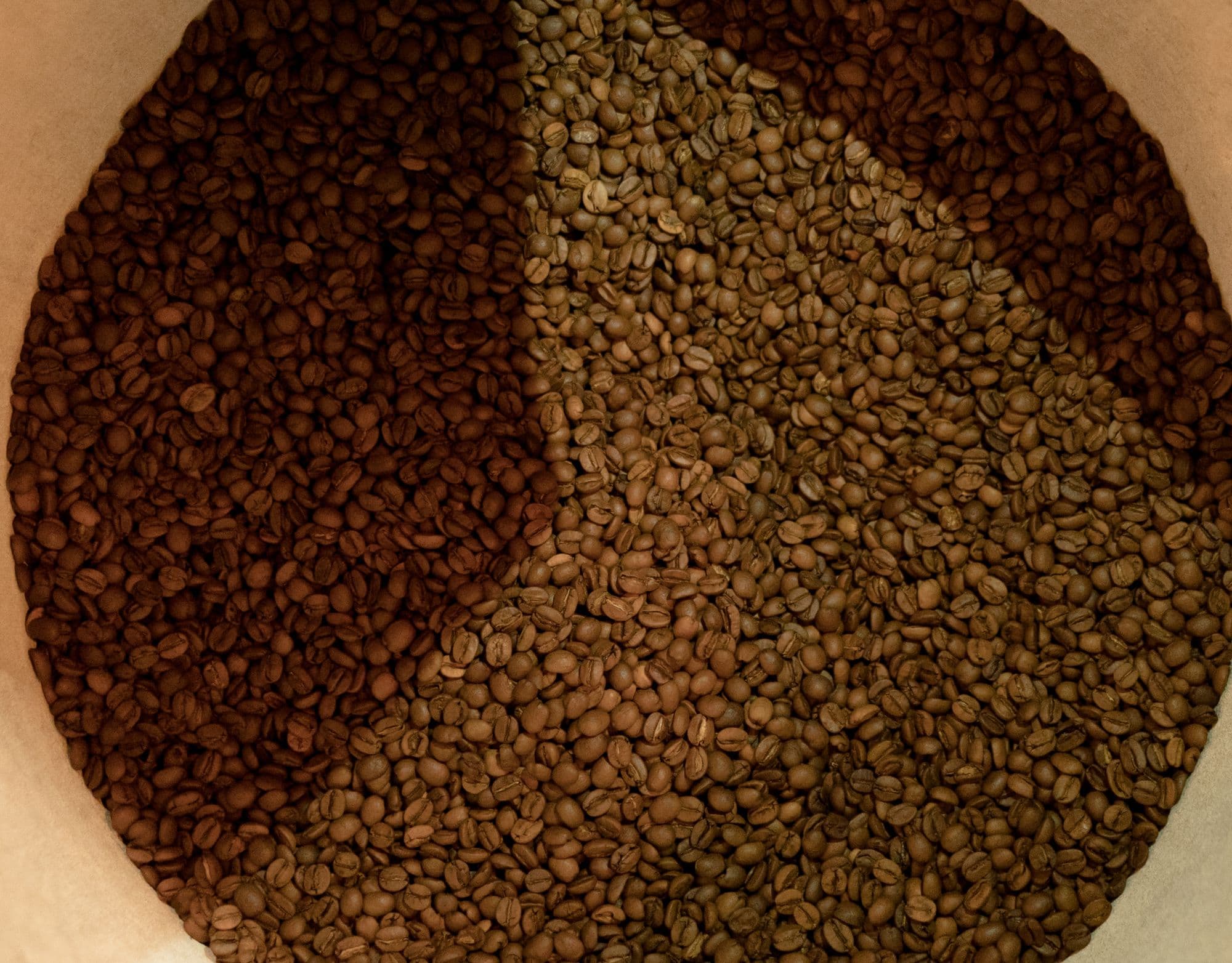
Coffee beans in a range of shades from light tan to dark brown.
SettingLightDark
GrindFinerCoarser
Ratio1:2.5 to 1:31:1.5 to 1:2
Water93 to 96 °C90 to 92 °C
TimeOften past 30 sGoes bitter fast

Fresh beans need a rest

Coffee that’s just been roasted is full of carbon dioxide. It bubbles out during the shot and makes it foamy, uneven and hard to dial in. Most espresso roasts settle down 7 to 14 days after the roast date, and light roasts often need longer. Old beans have the opposite problem: less crema, faster shots and a flat taste, and you’ll find yourself grinding finer and finer to keep up.

Roast day7 days14 daysUsually readyLight roastsToo fresh: foamy, uneven

When to stop tweaking

When you’d happily drink the shot again, you’re done. Leave the settings alone for the rest of the bag, though you’ll probably need to nudge the grind finer as the beans age.

Since grind is the thing you’ll adjust most, the grinder matters more than most people expect. Our recommended builds pair a machine and grinder at each budget, or you can price out your own setup in the builder.

Compare grindersRecommended builds

Photos: Arwen on Unsplash, Olha Ruskykh on Pexels.